Inside the Machine: What Amazon SageMaker Actually Does and Why Engineers Have Complicated Feelings About It

AWS Machine Learning | Platform Deep Dive
There is a ritual that every machine learning engineer knows intimately. You open a fresh server instance. You spend the first two days not doing any machine learning at all, just fighting CUDA drivers, dependency conflicts, broken Docker images, and networking policies that nobody documented. By the time your environment actually works, you have almost forgotten what you were trying to build.
Amazon SageMaker was designed to kill that ritual. Launched in 2017, it promised to abstract away everything painful about ML infrastructure and let engineers focus on the actual science. Eight years on, it has largely kept that promise, though not without its own brand of complexity, pricing surprises, and opinions strong enough to start arguments at tech conferences.
What SageMaker Actually Is
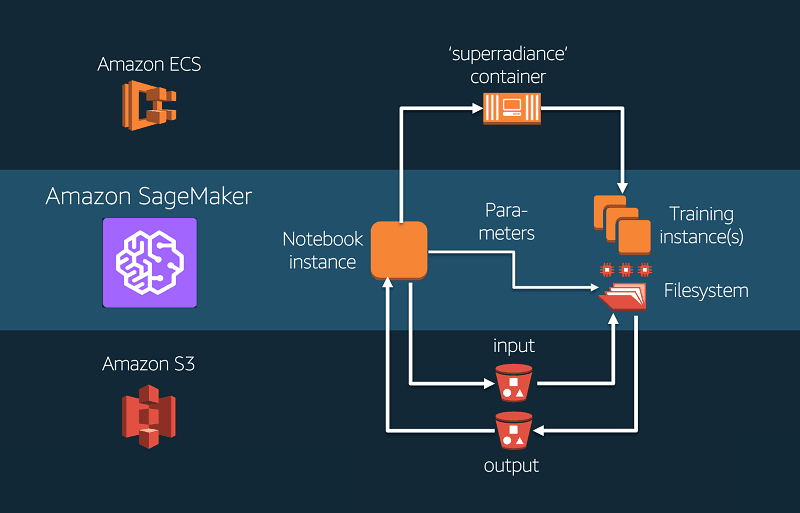
Strip away the marketing language and for the platform engineer, SageMaker is essentially a set of proprietary APIs used to provision ephemeral compute for training and persistent compute for inference. When you submit a training job, SageMaker spins up EC2 GPU instances, pulls your Docker container, mounts your dataset from S3, runs your training script, saves the model artifacts back to S3, and terminates everything cleanly. You pay only while compute is running. The cluster never existed in any permanent sense. TrueFoundry
This is elegant and occasionally maddening. The instances are not yours to SSH into mid-job. Debugging a silent training failure means parsing CloudWatch logs because you cannot attach a debugger the way you would on a local machine. The abstraction that saves you setup time can also obscure what is actually breaking.
With SageMaker AI, you can build, train, and deploy machine learning and foundation models at scale with infrastructure and purpose-built tools for each step of the ML lifecycle. The key phrase is "each step." Most platforms handle one or two phases well. SageMaker tries to own the entire journey, from raw data all the way to deployed endpoint and post-deployment monitoring. That ambition is both its greatest strength and the source of its complexity. Amazon Web Services
The Unified Studio Shift
The most significant change to SageMaker in recent memory came at re:Invent 2024 with the introduction of SageMaker Unified Studio. This was not a feature update. It was a philosophical pivot about how data and AI work should coexist.
Amazon SageMaker Unified Studio is a single data and AI development environment that brings together functionality from Amazon EMR, AWS Glue, Amazon Athena, Amazon Redshift, Amazon Bedrock, and Amazon SageMaker AI. From within the unified studio, you can discover, access, and query data and AI assets, then collaborate to build and share analytics and AI artifacts including data, models, and generative AI applications. AWS
Before this, a data engineer, a data analyst, and a machine learning engineer at the same company would each live in different AWS consoles with separate authentication setups and no shared visibility into what the others were building. A data scientist might spend weeks engineering features without knowing that the upstream data pipeline had changed entirely. Unified Studio collapses these silos into one governed workspace.
Real companies are already feeling the difference. At Carrier, SageMaker Unified Studio's approach to data discovery, processing, and model development significantly accelerated their lakehouse implementation. Its seamless integration with their existing data catalog and built-in governance controls enabled them to democratize data access while maintaining security standards. Amazon Web Services
HyperPod and the GPU Availability Problem
Ask anyone training large models today what their biggest operational headache is, and the answer is almost always GPU availability. Demand for high-end accelerator clusters has been staggering, and a single node failure during a multi-week training run can corrupt checkpoints and waste enormous amounts of budget.
SageMaker training plans provide predictable access to high-demand GPU-accelerated computing resources, with SageMaker automatically managing infrastructure setup, workload execution, and fault recovery, allowing efficient planning and execution of mission-critical AI projects with a predictable cost model. AWS
HyperPod, SageMaker's cluster management layer for large-scale model training, handles automatic node health checks and seamless checkpoint restoration after hardware failures. Most industry-leading models such as Falcon 40B, Falcon 180B, IDEFICS, Stable Diffusion, and StarCoder were all trained on SageMaker. That is not coincidental. For pre-training runs at genuine frontier scale, HyperPod is one of the few managed systems that can handle the job reliably. HPCwire
JumpStart: Deployment Without the Infrastructure Headache
Not every team needs to train from scratch. SageMaker JumpStart is a curated deployment hub for organizations that want capable models without building their own training pipelines. Select a model, click deploy, and SageMaker handles instance provisioning, container configuration, and endpoint setup automatically.
NVIDIA Nemotron 3 Nano Omni, a multimodal large language model with 30 billion parameters, is now available on SageMaker JumpStart. This model combines video, audio, image, and text understanding into a single architecture, enabling enterprise customers to build intelligent applications that can see, hear, and reason across modalities in one inference pass. Being able to deploy a model like that in a handful of steps, something that would have required months of infrastructure work just a few years ago, represents a genuine capability shift for teams without deep ML platform expertise. AWS
The Honest Weaknesses
SageMaker has real weaknesses that deserve plain acknowledgment. Serverless inference is useful for intermittent traffic, but suffers from cold starts that often take 5 to 10 seconds, making it unusable for latency-sensitive applications. If you need consistent sub-second response times for a customer-facing product, serverless inference will disappoint. You need persistent endpoints, which means paying for running compute around the clock regardless of actual traffic. TrueFoundry
SageMaker can be a bit of overkill at the beginning, and teams often need to grow into it. It is the right choice when your competitive advantage comes from how the model is built, not just how it is used. If you are training a model from scratch on sensitive data, like medical diagnostics or custom fraud detection, SageMaker provides the granular control you need. Stormit
Teams that simply want a chatbot or a recommendation widget are probably better served by Amazon Bedrock. SageMaker is for situations where your intellectual property lives inside the model weights, where proprietary data and domain-specific requirements demand full control of the training pipeline.
The Governance Layer Nobody Talks About
For regulated industries, SageMaker's governance capabilities justify the platform on their own. The Model Registry is an auditable record of every model ever trained, evaluated, and deployed, including who approved it and what metrics it achieved. SageMaker Clarify evaluates model predictions across demographic groups before deployment and flags statistically significant disparities. SageMaker Clarify helps customers evaluate, compare, and select the best models for their specific use case based on chosen parameters, supporting an organization's responsible use of AI. For banks subject to equal credit opportunity laws or healthcare companies whose diagnostic AI must meet regulatory guidance, these are not optional features. HPCwire
Final Verdict
SageMaker in 2026 is mature, ambitious, occasionally clunky, and genuinely powerful. You can train a model elsewhere and deploy it to SageMaker, or train a model in SageMaker and deploy it elsewhere. Companies use it as part of their ML workflows without relying on it for the entire process. That modularity is the most underrated thing about it. Use the pieces that solve real problems, skip the ones that don't fit yet, and you will find a platform that, for all its rough edges, has come closer than anything else to making serious machine learning accessible at enterprise scale.